Ecommerce Platform
Website, App, E-commerce and MVP Development Costs
PPrem M.7 Min Read
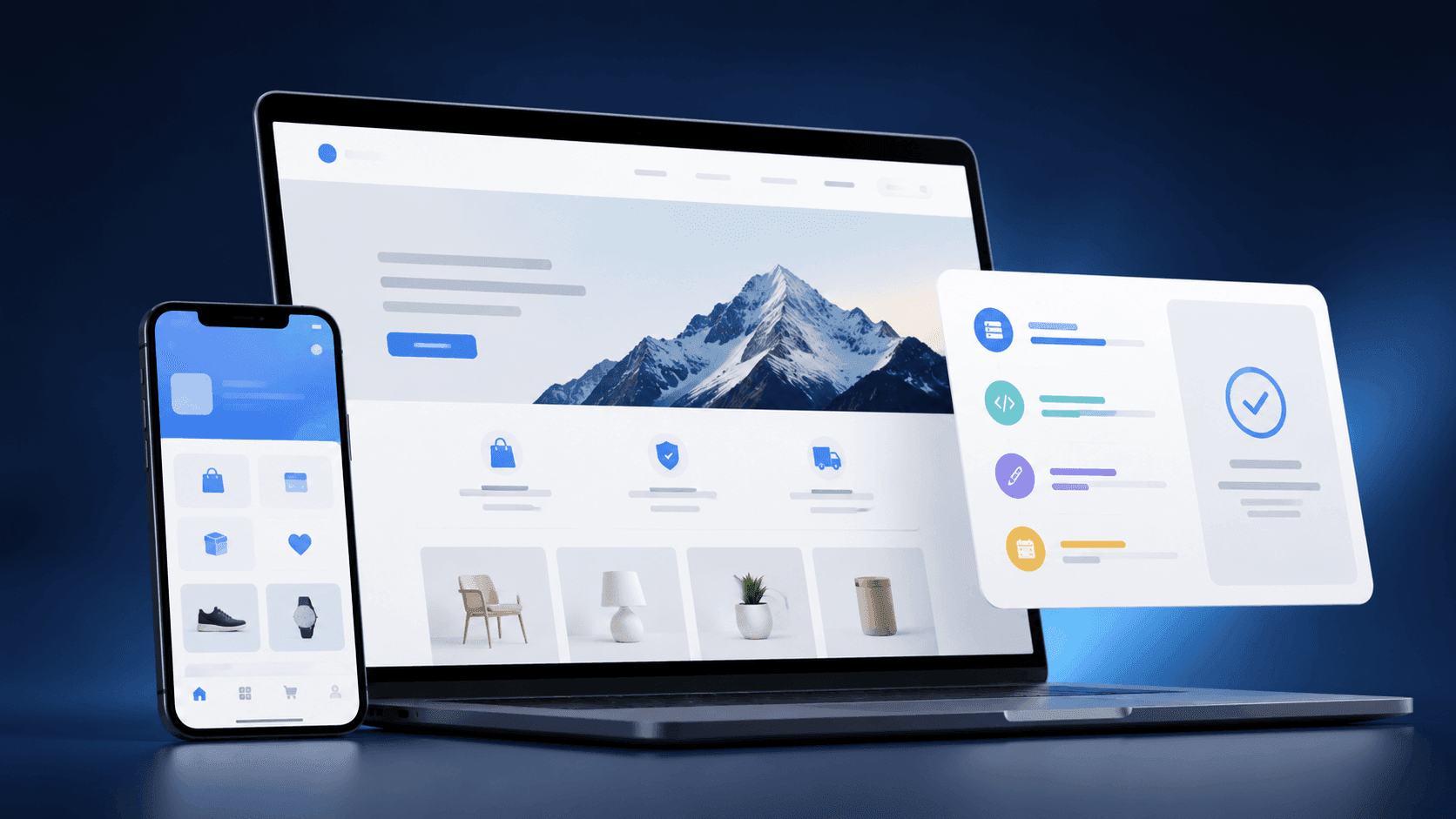
How much will it cost to build our digital product? is usually one of the first questions a founder, CEO or business leader asks.
The difficult part is that website development cost, mobile app development cost, e-commerce development cost and MVP development cost can vary dramatically between projects.
A professional business website is fundamentally different from a headless CMS platform. A basic online store is different from a connected D2C commerce ecosystem. A focused web MVP is different from a multi-tenant SaaS product or an AI-powered application.
That is why a useful 2026 development budget should begin with a transparent starting price, followed by a scope-based proposal built around what the business actually needs.
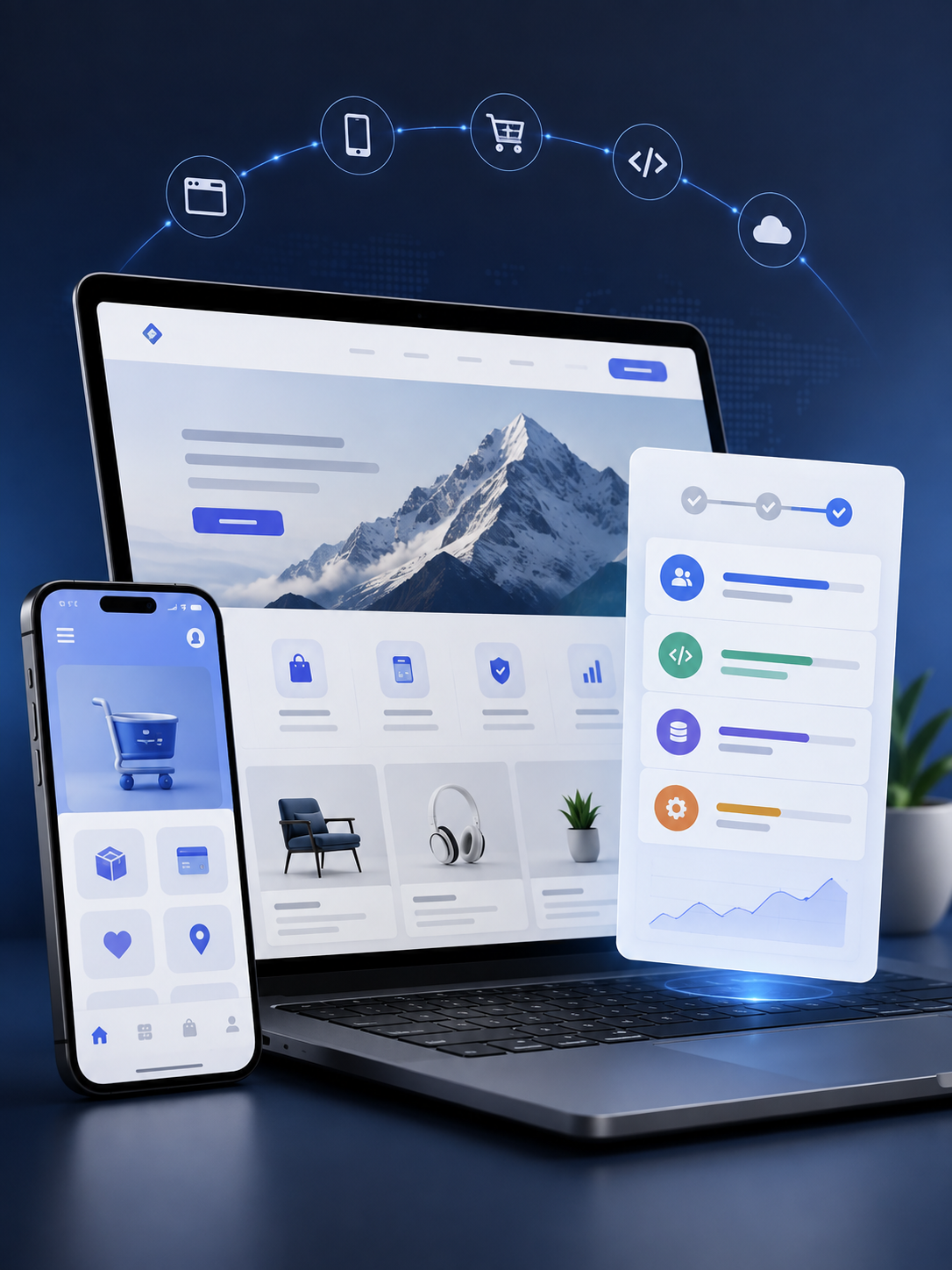
Compare website, mobile app, e-commerce and MVP starting costs, then get a scope-based proposal aligned to your business goals.
For businesses planning an international digital product, Murmu Software Infotech currently provides the following starting investments:
| Digital Product | Starting Investment |
|---|---|
| Business Website | From $2,500 |
| E-commerce Platform | From $4,500 |
| Web MVP | From $7,500 |
| Mobile App MVP | From $8,500 |
| Headless CMS Platform | From $9,500 |
| SaaS MVP | From $12,500 |
| AI-Powered MVP | From $15,000 |
| SitecoreAI Platform | From $30,000 |
These are starting prices rather than universal fixed quotations.
The final investment depends on features, user roles, screens, integrations, content requirements, architecture, security, compliance, infrastructure and delivery timeline.
Businesses can review the current packages and launch benefits on the Limited Digital Product Launch Offer 2026.
Starting from $2,500
A professional website is appropriate when the primary objectives are branding, lead generation, service discovery, content publishing and search visibility.
A typical business website may include:
The cost increases when the website requires multilingual content, advanced search, CRM integration, customer portals, custom calculators or significant backend functionality.
If content needs to be reused across websites, mobile applications and other channels, a headless architecture may be a better long-term investment.
Starting from $9,500
A headless CMS separates content management from the frontend presentation layer.
Platforms such as Sanity, Strapi, Umbraco and Sitecore can be combined with modern frontend frameworks such as Next.js to support structured content, reusable components and API-first delivery.
Headless development is particularly useful for businesses expecting:
The additional investment is justified when content becomes an operational capability rather than simply a collection of website pages.
Starting from $4,500
A focused e-commerce platform can include product and category management, search, cart, checkout, customer accounts, payment integration, order management, shipping configuration, promotions and analytics.
But commerce complexity increases quickly.
A growing D2C or B2B company may eventually require:
Storefront → Inventory → Payments → Orders → Shipping → CRM → ERP → Loyalty → Mobile Commerce
Advanced requirements such as subscriptions, marketplaces, multi-store operations, vendor management, B2B pricing, ERP synchronisation or headless commerce should therefore receive a custom proposal.
This is why comparing e-commerce quotations only by the number of pages or products can be misleading. The underlying business workflows usually determine the real development effort.
Mobile app MVPs start from $8,500
An Android and iOS business application should not simply duplicate a website.
It should make an important customer or operational workflow easier.
That could mean:
A cross-platform approach using technologies such as React Native can provide Android and iOS experiences while sharing significant application logic.
However, costs increase with real-time communication, video, maps, offline capabilities, background services, complex payments, hardware integrations or separate user experiences.
The right starting question is therefore not How many screens does the app need?
It is “Which workflow should the mobile app improve?”
Starting from $7,500
An MVP should be the smallest product capable of validating an important business assumption with real users.
A focused web MVP may include:
The objective is not to build every feature imagined for the final product.
It is to answer a business question.
Will customers use it? Will they pay? Does the workflow solve the problem? Can we acquire and retain the target user?
This focus is one of the most effective ways to control MVP development cost.
Starting from $12,500
A SaaS product usually requires more product infrastructure than a simple web MVP.
Depending on scope, it may need:
Multi-tenancy, advanced permissions, billing logic, audit history, enterprise authentication and large-scale reporting can significantly increase complexity.
Founders should therefore prioritise the core recurring-value workflow before expanding the first release.
Starting from $15,000
Adding an API call to an LLM does not automatically create a valuable AI product.
Effective AI MVPs are usually built around a real workflow and may combine:
AI development cost depends heavily on the data sources, tools the AI can access, accuracy requirements, security controls and actions the system is permitted to perform.
A better AI product question is:
Which business decision or workflow should AI improve?
Then architecture and budget can follow the business objective.
Across websites, apps, commerce and MVPs, several factors consistently affect the final proposal.
Ten straightforward screens can require less effort than one highly interactive workflow with complex business rules.
Customer, administrator, seller, doctor, employee, manager and partner experiences each introduce permissions, workflows and testing requirements.
Payments, CRM, ERP, maps, video, logistics, AI, accounting and third-party APIs add development and validation effort.
Custom interaction design and advanced responsive interfaces require more work than adapting an established design system.
Healthcare, fintech and enterprise applications may require additional controls, auditability and compliance planning.
An MVP for hundreds of early users has different infrastructure requirements from an enterprise platform serving multiple markets.
Hosting, monitoring, API subscriptions, maintenance, security updates and future feature development should be considered part of the total product investment—not treated as surprises after launch.
Two agencies can receive the same project description and produce dramatically different quotations.
One may assume a template. Another may propose custom UI.
One may include QA, DevOps and project management. Another may quote development only.
One may architect for future scale. Another may optimise purely for the first release.
One may include integrations. Another may classify them as additional work.
Therefore, compare proposals based on deliverables and assumptions, not just total price.
Ask:
A cheaper proposal is not cheaper if essential requirements appear later as change requests.
Transparent starting prices help decision-makers understand whether a project is broadly aligned with their available investment.
But responsible software estimation still requires scope.
At Murmu Software Infotech, the objective is to connect the two:
Transparent Starting Investment → Requirement Review → Scope Definition → Architecture → Milestones → Commercial Proposal
This gives founders and business leaders an early budget reference without pretending that every website, mobile app, e-commerce platform or MVP requires identical development effort.
The most important development-cost decision in 2026 is not whether one framework costs slightly more than another.
It is deciding what the product must accomplish first.
A $7,500 focused MVP that validates the right assumption can create more business value than a significantly larger product filled with features customers never requested.
Similarly, a $2,500 business website can be appropriate for a company primarily needing credibility and lead generation, while a growing multi-market organisation may receive far greater value from a headless CMS platform.
The correct investment depends on the business stage, workflow, customer experience and growth roadmap.
Murmu Software Infotech helps startups, growing companies, agencies and enterprises plan, design and develop websites, mobile applications, e-commerce platforms, SaaS products and AI-powered MVPs through milestone-based delivery.
Current starting prices: Business websites from $2,500 • E-commerce from $4,500 • Web MVPs from $7,500 • Mobile app MVPs from $8,500 • Headless platforms from $9,500 • SaaS MVPs from $12,500 • AI-powered MVPs from $15,000.
Explore the Digital Product Launch Offer 2026 or share your requirements to receive a scope-based development proposal.
Website development cost depends on design, page structure, CMS, integrations, multilingual requirements and custom functionality. Murmu Software Infotech currently lists international business website projects starting from $2,500, with final pricing based on scope.
Mobile app development costs vary according to platforms, workflows, screens, backend APIs, authentication, payments, notifications, maps and integrations. Murmu Software Infotech currently lists mobile app MVP development starting from $8,500.
E-commerce development cost depends on products, checkout, payment gateways, customer accounts, inventory, shipping, promotions, CRM or ERP integrations and marketplace requirements. MSI currently lists e-commerce development starting from $4,500.
A web MVP should focus on the smallest feature set required to validate the core business model. MSI currently lists web MVP development starting from $7,500, while the final proposal depends on workflows, users, integrations and architecture.
SaaS MVP costs depend on authentication, organisations, roles, subscriptions, dashboards, billing, analytics, APIs and multi-tenant requirements. MSI currently lists SaaS MVP development starting from $12,500.
AI MVP development costs depend on models, RAG, vector databases, AI agents, MCP integrations, business automation, data sources, security and human approval requirements. MSI currently lists AI-powered MVP development starting from $15,000.
The largest cost drivers typically include feature complexity, user roles, UI and UX requirements, third-party integrations, backend architecture, security, compliance, infrastructure, AI capabilities, testing and delivery timelines.
Proposals may include different assumptions about custom design, architecture, integrations, QA, DevOps, project management, deployment and post-launch support. Businesses should compare scope and deliverables rather than comparing only the final price.
Most startups should initially build the smallest product capable of validating the core customer problem, workflow and business assumption. Additional features can then be prioritised using real user feedback and product data.
Define the target users, core workflow, must-have features, integrations, platforms, administration requirements and launch goals. A development partner can then convert those requirements into scope, architecture, milestones and a project-specific commercial proposal.